

Libyan Youth Conference in Tripoli Underscores National Shift Toward Restoring Libya’s Constitutional Monarchy

Youth attendees at the NFUP gathering in Tripoli
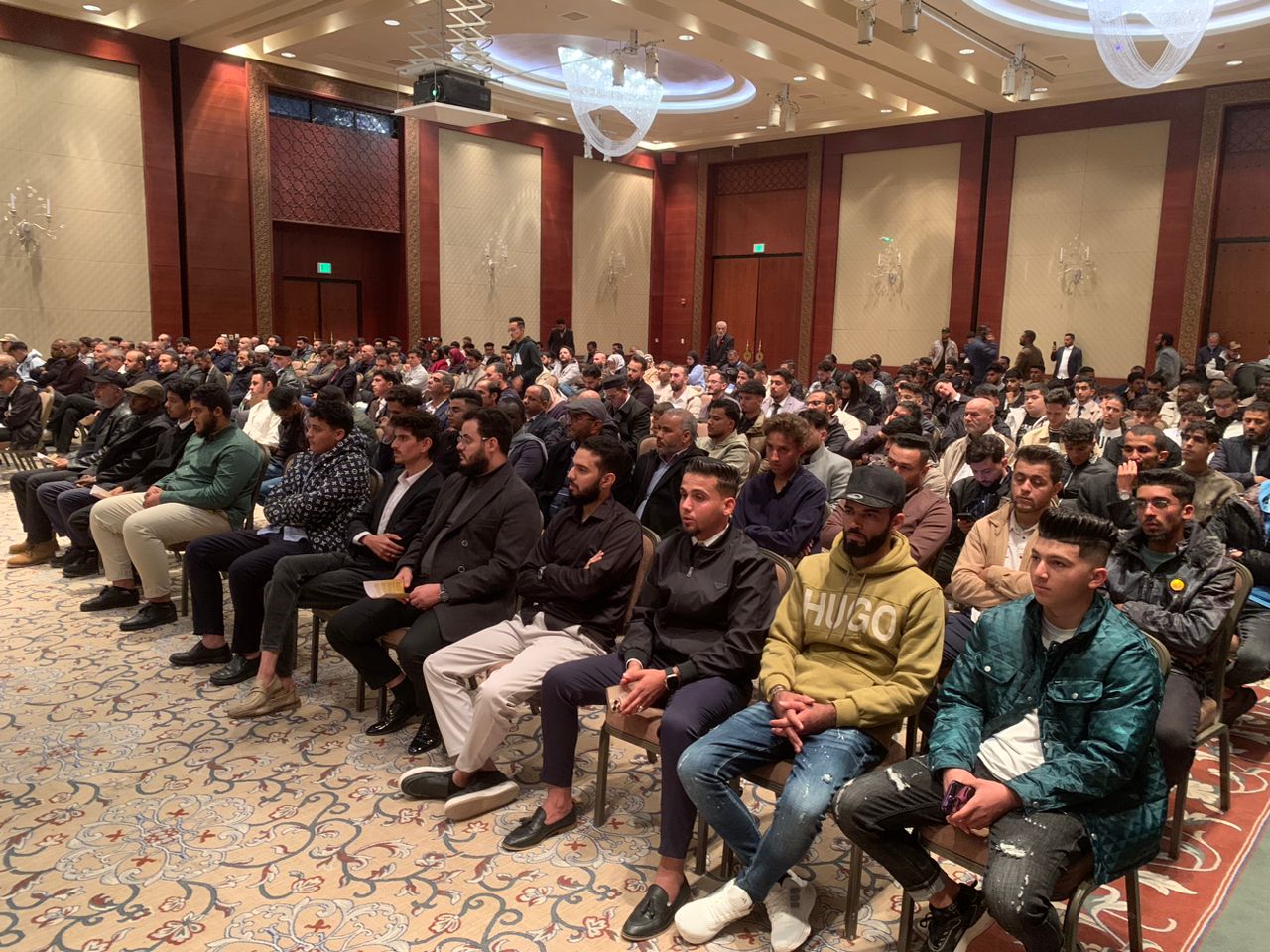
Youth attendees at the NFUP gathering in Tripoli
Conference Highlights Growing Support Among Libya's Youth for Crown Prince Mohammed El Senussi and the Restoration of Libya’s 1951 Constitutional Order
TRIPOLI , LIBYA, December 5, 2025 /EINPresswire.com/ -- A groundbreaking youth conference convened on 4 December in Tripoli under the umbrella of the National Forum for Unity and Peace (NFUP), bringing together over 1,000 young Libyans from across the country. This marks the third significant national mobilisation in less than a month—following the massive NFUP gathering on 15 November and the women’s conference on 22 November—and reflects a widening alignment around the need to restore Libya’s original constitutional framework in its complete and lawful form.Participants, who represented youth from across Libya’s political spectrum and numbered around 1,000, packed a hall in Tripoli to capacity. They emphasised that Libya’s youth, who constitute the majority of the population, have long been underrepresented in national decision-making. They expressed a shared view that repeated transitional arrangements have failed to produce durable governance or unified institutions, and that stability requires returning to Libya’s foundational legal order.
Central to the discussions was the 1951 Independence Constitution in its entirety, including the constitutional monarchy that forms an integral part of that framework. Attendees underscored that the constitution does not separate the parliamentary system from the monarchy; rather, the monarch is defined within the constitutional text as the lawful head of state and a central component of the constitutional design. Participants reaffirmed the widely held position within the NFUP movement that the constitution was never annulled through any valid national procedure and therefore remains Libya’s last legitimate and comprehensive constitutional order.
Crown Prince Mohammed El Senussi addressed the conference virtually in a well-received speech, noting the importance of the growing participation of young Libyans in national dialogue efforts. His role is rooted directly in the 1951 Constitution, which establishes the Senussi monarchy as an essential element of Libya’s constitutional architecture. The Crown Prince reiterated that constitutional legitimacy—understood as the restoration of the complete 1951 constitutional system, including its monarchical structure—is the most reliable foundation for unity, institutional continuity, and equal opportunity across all regions of the country.
Early in the discussions, Ibrahim Al-Huwaije, Head of the Libyan Youth Parliament, observed:
“As the majority of Libya’s population, young people are no longer willing to inherit instability. We are choosing a path proven to work: a constitutional monarchy built on law, accountability, and national unity. Our message is clear—Libya deserves institutions that serve its people, not factions.”
Speakers highlighted that restoring the 1951 constitutional order and the monarchy is a forward-looking approach to rebuilding Libya’s institutions. Under that framework, the elected parliament and government hold executive authority, while the monarchy provides unity, continuity, and an impartial anchor above political competition. Participants also noted that the constitution contains amendment mechanisms that allow Libyans to update the framework once legitimacy is re-established, aligning it with modern needs without departing from its foundational structure.
Later in the meeting, Ayman Shilli, a member of the organising committee, added:
“What we witnessed over these past weeks—thousands of Libyans coming together in Tripoli from every region, tribe, and background—proved that the demand for constitutional legitimacy is a national consensus. Guided by the leadership of Crown Prince Mohammed El Senussi, the youth are not asking for a seat at the table anymore. We are claiming our rightful role as the engine of Libya’s renewal.”
Organisers emphasised that the scale and clarity of youth mobilisation represent a significant development in Libya’s evolving national landscape. They noted that the movement builds on the broader national dialogue process initiated by Crown Prince Mohammed El Senussi through gatherings in Istanbul, London, Rome, Paris, and Madrid, which has engaged Libyans from across regions and sectors over recent months.
The conference concluded with participants expressing a collective commitment to continue advancing national dialogue and supporting efforts to re-establish Libya’s constitutional order in its complete and lawful form. Organisers stated that youth involvement will remain central as Libya seeks to restore a stable, legitimate, and unified framework for governance capable of guiding the country’s future development.
Mr. Abdelgader Teiby
National Forum for Unity and Peace (NFUP)
email us here
Legal Disclaimer:
EIN Presswire provides this news content "as is" without warranty of any kind. We do not accept any responsibility or liability for the accuracy, content, images, videos, licenses, completeness, legality, or reliability of the information contained in this article. If you have any complaints or copyright issues related to this article, kindly contact the author above.
